
Make housing affordability the priority
This week, Environment Minister David Parker released his draft Natural and Built Environments bill. It is the first of three pieces of legislation to replace the Resource Management Act. Read more
Humans are fallible creatures. We make mistakes. Read more
At least the old Cold War made for better entertainment. Exchanges of captured spies at dusk at Berlin’s Glienicke Bridge. Read more
To maximise wellbeing, important public policies and programmes must work. They should be rigorously evaluated to ensure that they have the intended effect, are efficient, and meet their objectives. Read more
Last week’s post-Covid fiscal and monetary policy workshop, hosted jointly by the Reserve Bank and Treasury, seemed designed to warm the policy economics community to higher levels of public debt. While low interest rates mean investment projects that might not normally make the grade can now stack up, stacking up debt builds its own fragility. Read more
A news item this week reported the Minister of Health was “enormously frustrated”. We can think of quite a few in the private sector who know that feeling. Read more
I am increasingly convinced that our impressive economic recovery from COVID is being led by orange cones. The things are everywhere, clogging up our roads and cycleways and footpaths. Read more
According to the Peter Principle, people in a hierarchy tend to rise to their "level of incompetence." While intended as satire, many people will have their own story of the Peter Principle in practice. Of a boss not up to the role they have been promoted to fulfil. Read more
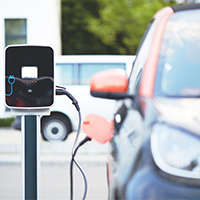
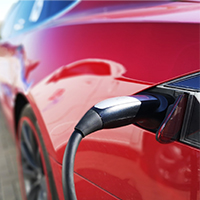
This week, a strong majority of Australian economists came out in support of a policy measure to encourage electric vehicle adoption on their side of the Tasman. But they did not support subsidies for electric vehicles. Read more
Readers of this column will be only too well aware why the Government’s proposals to return to compulsory, occupation-wide collective bargaining (misleadingly dubbed “Fair Pay Agreements”) will damage New Zealand’s already fragile productivity growth. The evidence is set out in black and white in The New Zealand Initiative’s 2019 report, Work in Progress: Why Fair Pay Agreements would be bad for labour. Read more
The Government’s so-called clean-car ‘feebate’ scheme has copped a lot of criticism. However, the Government at least deserves credit for its creativity. Read more
There are many ways a Minister can communicate with their Ministry. From an email from an advisor to a quiet word with officials (or sometimes a not so quiet word). Read more
The vehicle feebate scheme announced Sunday might result in more electric vehicles, but it cannot affect net carbon emissions. Transport is covered by the Emissions Trading Scheme’s binding cap on net emissions. Read more
The government’s announcement on Sunday of subsidies for electric vehicles did not make any case that the benefits to the public would plausibly exceed the costs. To fail to demonstrate positive net benefits is to fail to make a public wellbeing case for the measure. Read more
Just as Europe’s economies are emerging from the Covid-19 recession, the next big European crisis is already visible on the horizon. It is just not clear what kind of crisis it will be: another debt crisis, an inflation crisis, or a combination of both. Read more