Pros and Cons of a Universal Basic Income (UBI)
Dr Eric Crampton talks to Radio New Zealand, The Panel about a Universal Basic Income (UBI) and whether it would work in New Zealand. Listen to the full interview below. Read more
The prospect of a new Taika Waititi movie is usually a reason for joyful anticipation. However, watching the trailer of Jojo Rabbit and reading the first reviews left me appalled. Read more
Everyone has their guilty pleasures. For many people that guilty pleasure is a cheesy melodramatic soap opera. Read more
Monday saw Wellington’s Lambton Quay come alive with a joyful parade celebrating Māori Language Week. Yet, when asked whether her government would make te Reo compulsory in schools Prime Minister Ardern dodged the question, explaining instead that even if the government wanted to do this, New Zealand lacks the necessary teaching workforce. Read more
In 1936, the father of Keynesian economics, John Maynard Keynes, used the term ‘animal spirits’ to refer to the fluctuating human emotions that can drive economic decisions in stressful times. Today the term is most often found in the context of investors’ decisions. Read more
A new report has found that New Zealand spends 5.5% of our national income on schooling - the seventh highest in the OECD. Chief Economist Dr Eric Crampton spoke to Mike Hosking and said larger class sizes are not a bad thing - if you have good quality teachers. Read more
Let’s say you’ve bought non-refundable tickets for a movie, and then hear scathing reviews. It’s better to tear up the tickets and make other plans for the evening rather than bloody-mindedly watch the film just because you’ve already paid to go. Read more
Bipartisan politics is a rare beast in New Zealand nowadays. It is even harder to spot when political parties are shy to sponsor necessary policy changes that might arouse public backlash at first. Read more
The great legacy of the reforms of the 1980s and 1990s were the durable institutions that have since guided how we are governed. The Fiscal Responsibility Act set a framework for balanced budgets that has withstood many changes in government. Read more
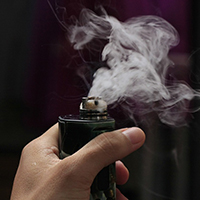
“Giving up smoking is the easiest thing in the world. I know because I’ve done it thousands of times” – Mark Twain Despite the “ease” of giving up smoking, the government wishes to make it harder by smoking out an alternative, healthier way of intaking nicotine – vaping. Read more
During a visit to a new London charter school in 2015, then-Mayor Boris Johnson sparred with a 12-year-old over the year the Roman Empire converted to Christianity (313 AD). Johnson was wrong (by a year) and dumbstruck by the knowledge of the inner-city children. Read more
Freshwater management is a tough political problem. Any substantive reduction in the nutrient load in too many of our rivers will require significant land use changes – and changes in wastewater practices in some towns. Read more
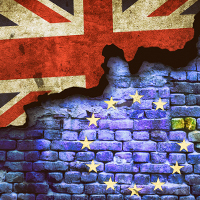
On Monday, my fellow columnist Rod Oram delivered a gloomy view of British democracy. Alarmed by Boris Johnson’s prorogation of Parliament, Rod echoed the views of those who believe the Prime Minister has chosen a most dangerous path. Read more
Status: Prohibited for all purposes (although, legalising cannabis for medical use is being considered) History: 2014: The state allowed a clinical trial of CBD (cannabidiol) oil to treat debilitating seizures at the University of Alabama 2012-2017: Failed attempts to legalise medical cannabis Policy Framework: Possession of cannabis for personal use is a misdemeanour for first-time offenders with a maximum penalty of a year of jail-time and a $US6000 fine; Repeat offenders and possession with intent to sell is a felony; Sale to a minor by someone under 18 is a felony with a maximum penalty of 10years - life in prison and up to a $US60,000 fine. Outcomes: In 2016, 92% of Cannabis arrests were for possession for personal use; Black people were four times as likely as white people to be arrested for cannabis possession despite robust evidence that black and white people consume cannabis at roughly the same rate in Alabama; In 2016, police made more arrests for cannabis possession (2351) than for robbery (1314) even though there were 4557 reported robberies; Cannabis abuse disorder rates in people in Alabama above the age of 12 decreased between the 2005 and 2017 (from 1.5% to 1.1%). Read more

Before last Wednesday, I had no idea I was “brave”. Until I was told so by a delegate who had heard me speak at a large infrastructure conference. Read more