New report explores and exposes foreign control and debt phobia
Click image for larger view.
Read more
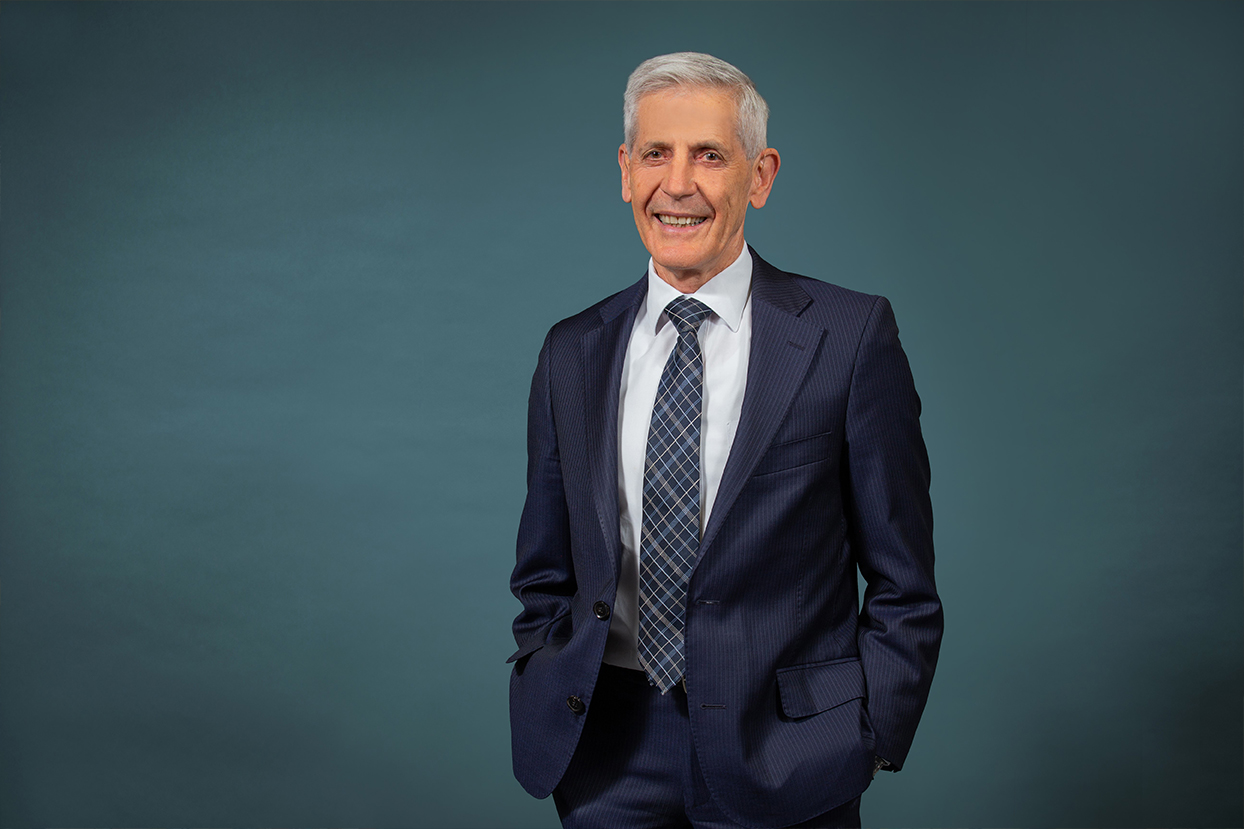
Bryce is a Senior Fellow at The New Zealand Initiative and the Director of the Wellington-based economic consultancy firm Capital Economics.
Prior to setting up his consultancy in 1997, he was director, and shareholder in First NZ Capital. Before moving into investment banking in 1985, he worked in the New Zealand Treasury, reaching the position of Director.
Bryce holds a PhD in Economics from the University of Canterbury and was a Harkness Fellow at Harvard University. He is a Fellow of the Law and Economics Association of New Zealand.
Phone: +64 4 499 0790
Click image for larger view.
Read more
New Zealand has depended on overseas trade and capital for its prosperity from colonial times. But prejudice against foreigners and foreign capital will always be with us. Read more
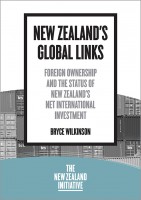
Dr Bryce Wilkinson launches our first report, New Zealand's Global Links: Foreign Ownership and the Status of New Zealand's Net International Investment The report provides a one-stop-shop for statistics on New Zealand's investment patterns. In particular, it shows that: Despite popular myth, New Zealanders actually earn more than they spend. Read more
Governments, worldwide, control the issuance of domestic money. That monopoly position creates the problem of determining how much money to print. Read more
I had the occasion last week to browse through the Proposed District Plan of a certain local authority in New Zealand in order to see how it assessed the costs and benefits to the community of its multitudinous restrictive provisions. The Resource Management Act 1991 (RMA) requires local authorities to “take into account the benefits and costs of policies, rules, or other methods” it puts into such plans. Read more
Governments use the minimum wage to keep workers with the least skills or work experience out of work, albeit as an undesired consequence rather than a direct intent. School-leavers have the least work experience – in addition, the lack of basic standards of literacy and numeracy is an enormous handicap for 10% to 20% of school-leavers. Read more
World share markets rose markedly on Monday this week: the US S&P 500 (by 2%), London FTSE (by 2.4%), Paris CAC (by 2.9%), Tokyo Nikkei (by 1.4%), and the Hong Kong Hang Seng (by 0.5%). Europe saw the biggest daily gain in 10 weeks, but from the lowest levels for months. Read more
George Mason University’s Mercatus Center is a top public policy think tank based in Virginia near Washington, DC. Some of its 2012 publications might be of interest to readers of Insights: a 28-page blueprint for regulatory reform in the United States (the blueprint could be easily applied to New Zealand). Read more
The Engineering, Printing and Manufacturing Union’s ‘jobs crisis’ summit in Auckland will be over in an hour or so after you receive this edition of Insights. The secretary of the EPMU, Bill Newson, claimed before the summit that the decline of manufacturing reflects 30 years of ‘hands-off’ economic management. Read more
Key points As measured by the OECD's FDI Regulatory Restrictiveness Index and analysed by The New Zealand Initiative: New Zealand has the sixth most restrictive FDI regime in the world New Zealand has the most restrictive FDI regime in manufacturing New Zealand runs the third-most restrictive FDI regime in restaurants and hotels Almost all of New Zealand's restrictiveness comes from screening processes - bureaucrats and ministers assessing how 'good' an investment is going to be for New Zealand, despite their poor incentives and lack of commercial knowledge. Of the 55 countries the OECD measured for FDI restrictiveness, 35 do not even have screening tests In addition: The 'sensitive land' and 25% ownership clauses in the Overseas Investment Act catch virtually any reasonably sized direct overseas investment Over the past 15 years, many other nations have substantially liberalised their overseas investment regimes, leaving New Zealand in a less competitive position to attract FDI Since 1993, the amount of FDI New Zealand attracts has trended down by 2% per decade, although the relationship is suggestive rather than robust at this point All New Zealanders can be expected to bear the cost of these foreign investment barriers through lower property values, a higher cost of capital, and weaker economic growth. Read more
The Government has a website (New Zealand Now) that markets New Zealand to the world as “a great place to live, invest and do business”. A great many New Zealanders, including the strongest opponents of foreign investment, would probably agree. Read more
Having security in one’s person and property is fundamental to human dignity and civilised society. The instruction “Keep your hands to yourself” and the commandment “Thou shalt not steal or trespass” encapsulate this wisdom. Read more
Budget 2012 continued National’s battle to control government spending by attrition rather than by ground-breaking reforms. This battle will be lost eventually because mere attrition increasingly mobilises thwarted spending interests, while preserving both their privileged positions and the mechanisms they can use to increase spending when attrition fatigue has set in. The Yes, Minister TV series made the point best: entrenched interests and bureaucracies outlast politicians. Read more
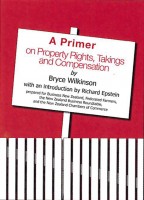
This report is motivated by the realisation that there is a need in New Zealand for a wider understanding of the importance of security of all property rights for civil peace, prosperity, constitutional government, social cohesion and ultimately the democratic system. Respect for private property rights implies the need for restraint, both by governments and by lobby groups. Read more
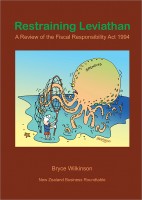
Since 1994 the Fiscal Responsibility Act has been a key element of New Zealand’s framework for sustaining fiscal surpluses and reducing net indebtedness. Bryce Wilkinson reviews New Zealand’s experience with the Act, identifies its strengths and weaknesses, and suggests improvements. Read more