Growth can ease misery
Bloomberg has just published its list of the 15 most miserable economies in the world for 2015. Misery is measured as the sum of the unemployment rate and the inflation rate. Read more
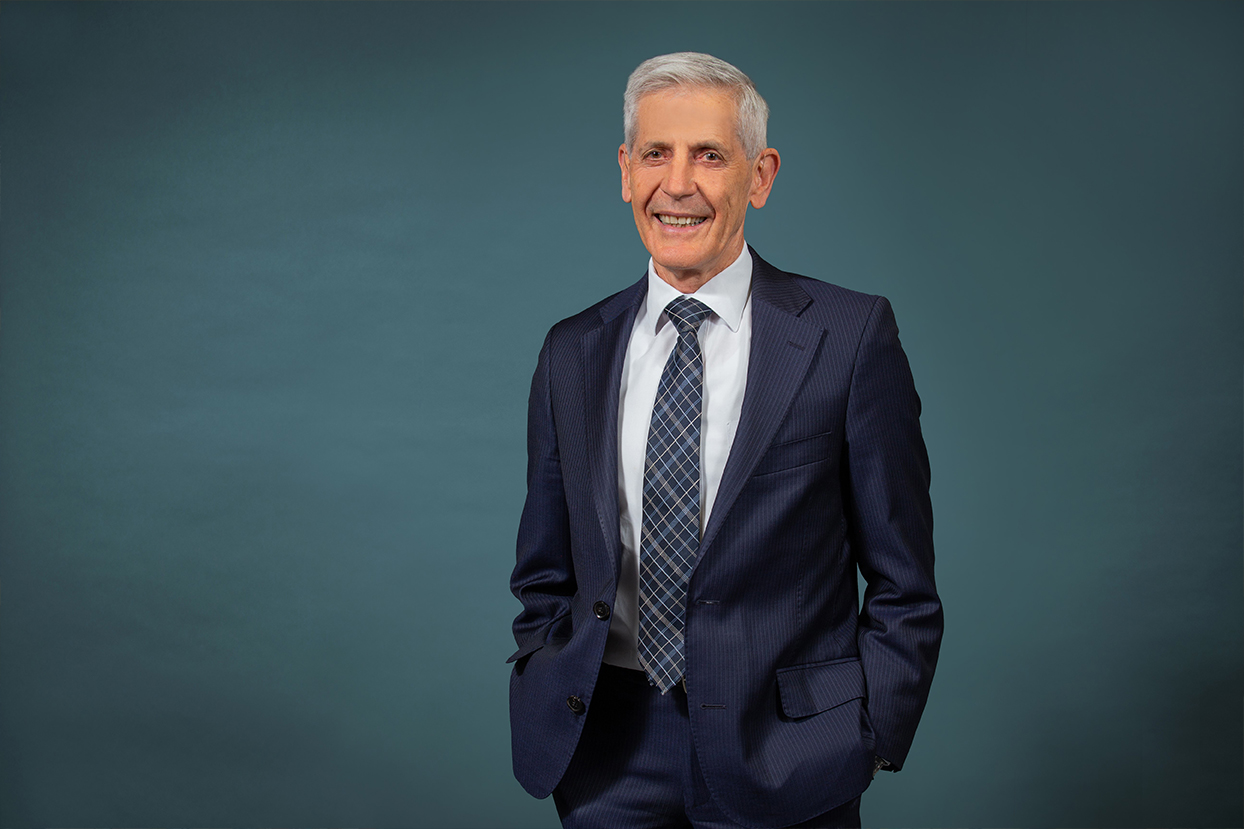
Bryce is a Senior Fellow at The New Zealand Initiative and the Director of the Wellington-based economic consultancy firm Capital Economics.
Prior to setting up his consultancy in 1997, he was director, and shareholder in First NZ Capital. Before moving into investment banking in 1985, he worked in the New Zealand Treasury, reaching the position of Director.
Bryce holds a PhD in Economics from the University of Canterbury and was a Harkness Fellow at Harvard University. He is a Fellow of the Law and Economics Association of New Zealand.
Phone: +64 4 499 0790
Bloomberg has just published its list of the 15 most miserable economies in the world for 2015. Misery is measured as the sum of the unemployment rate and the inflation rate. Read more
The Parliamentary Commissioner for the Environment (PCE) has hired Crown research institute NIWA to draw up coastal hazard lines. Yet the 2012 hazard line guidance co-authored by NIWA staff fails to define, even in principle, what likelihood such lines are meant to represent, let alone justify that choice in cost-benefit terms. The folly of coastal hazard lines of unknown likelihood and net benefit is illustrated by the experience in 2012-14 of the Kapiti Coast District Council. Read more
Could the Green Party of Aotearoa become an environmental party that was neutral, if not liberal on economic issues? Must it see economic growth and a healthier environment as opposites rather than complements? Read more
Lower prices from productivity gains and lower import prices relative to export prices are a good thing. Yet many overseas commentators worry about price deflation. Read more
One critical response to my 12 January 2015 Dominion Post article here on the need for the benefits from government scaffolding regulation to exceed the costs asserted that: This misses the point that that decisions about people's safety at work should never be based solely on money. There is a moral test that also needs to be satisfied. Read more
We should not pay through the roof for small safety benefits, argues Bryce Wilkinson How would you react to being told that government regulations have added 50 percent to the cost of replacing a tin roof on a house? I ask because a long-standing professional builder told me in a chance encounter shortly before Christmas that scaffolding requirements under the Health and Safety in Employment Act 1992 mean that a small re-roofing job that would have otherwise cost $4,000 may now cost $6,000. Read more
Demographic aspects Projections of an ageing population are robust on the basis of current trends: New Zealanders' 2010 median age of 35.8 years lifts to 43.0 years by 2060 under Statistics New Zealand's medium scenario projections. The number of dependent persons (under 15 or over 64) per 100 people of working age (15-64) is projected to rise by 44% from 50 in 2010 to 72 in 2060. Read more
William Voegeli, a senior editor at Clarement Review of Books, recently gave a speech, The case against liberal compassion, at Michigan's Hillsdale College that raised the question of why many (US) liberals appear to feel that no matter how much governments are spending to alleviate and prevent poverty, the latest amount is always shamefully inadequate. He put US federal spending on welfare, including health and education, in 2013 at 2/3rds of all federal outlays and 14% of GDP. Read more
Last week Tyler Cowen drew attention, in Marginal Revolution, to Vox blogger, Dylan Matthews', opinion that "New Zealand's parliament is better designed than just about any other developed country government". Aw shucks! Read more
A week just spent in the glittering, throbbing city-state metropolis that is Hong Kong, is a reminder that there is a lot more to this place than its stunning night-time skyline. Rolls Royce cars and Ferraris adorn its streets, perhaps to an uncomfortable degree from an egalitarian Kiwi perspective, yet labour-intensive, bespoke suits are still much cheaper than in New Zealand. Read more
Democracy is a very fine thing, yet is worth dying for, and it is humbling to think of all those who have. Yet general election campaigns do not bring the populace's best instincts to the fore. Read more
A two-page feature in the Sunday Star-Times (Aug 3) says Labour’s promise to introduce a capital gains tax and raise the top rate of income tax has put “equality” back at the heart of economic and political debate. The only concept of equality the article considers is one where the ideal is that everyone gets the same income regardless of how hard or productively they work. Read more
An article recently published by the New Zealand Listener, Child support that works, asserts that the existing system of child support "is next to useless at reducing poverty" - because, to a large extent "Government simply takes the child support to offset the benefit".Yet this is exactly what should happen if the purpose of the benefit is to top up inadequate child-support payments by non-custodial parents. Child-support payments allow more children to be supported than could be funded otherwise. Read more
MYTH 1: Foreign investment means loss of control Parliament remains the supreme law-making body, inwards foreign investment must comply with New Zealand laws, and foreigners don't get to vote. Land use and business activity is extensively regulated in New Zealand, for overseas and local investors alike. Read more