

Budget previews
One key to happiness is not letting your expectations run ahead of what is possible, as that only leads to disappointment. But what has been announced thus far makes for a depressing Budget Day. Read more
Eric Crampton is Chief Economist with the New Zealand Initiative.
He applies an economist’s lens to a broad range of policy areas, from devolution and housing policy to student loans and environmental policy. He served on Minister Twyford’s Urban Land Markets Research Group and on Minister Bishop’s Housing Economic Advisory Group.
Most recently, he has been looking at devolution to First Nations in Canada.
He is a regular columnist with Stuff and with Newsroom; his economic and policy commentary appears across most media outlets. He can also be found on Twitter at @ericcrampton.
Phone: +64 4 499 0790
One key to happiness is not letting your expectations run ahead of what is possible, as that only leads to disappointment. But what has been announced thus far makes for a depressing Budget Day. Read more
Sean Plunket, The Platform interviews Eric Crampton. Eric comments on a range of issues including a proposed congestion charge for Auckland, reworking the income tax brackets, the government's response to the pandemic and migration. Read more
Those on the economic right sometimes wish for flat taxes. If inflation continues to run at 7 percent and the country’s tax thresholds do not change, we will eventually wind up with one. Read more
The ACT Party has said that its time to face reality on the superannuation age as it would save the tax payer over $16 billion over the next 12 years. Eric Crampton joins Wallace Chapman on Radio NZ The Panel to discuss this issue and how it could work in New Zealand. Read more
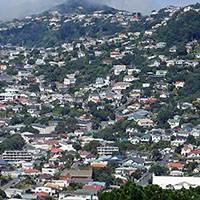
The Initiative normally focuses on national-level policy. However, we are based in Wellington. Read more
Reading through Wellington council’s draft economic wellbeing strategy isn’t great for an economist’s mental wellbeing. Our capital city faces a lot of challenges. Read more
Wellington is a confusing place. In 2017, the Government wanted to plant One Billion Trees and set a lot of costly policies to achieve it. Read more
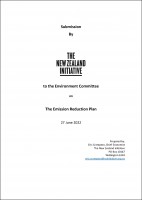
This submission is in response to the Ministry for the Environment and Ministry for Primary Industry’s Discussion Document Managing exotic afforestation incentives. The Document proposes not awarding carbon credits through the ETS for permanent exotic forestry planting, despite the carbon sequestered in such forests, because of other perceived problems resulting from exotic forestry planting. Read more
Governments like scapegoats. A good scapegoat can take the blame for something that is a government’s fault. Read more
For decades, newspapers’ business model was simple. Classified ads paid most of the bills. Read more
Russia’s Embassy in Wellington includes some 20 officials and their partners. The Ministry of Foreign Affairs and Trade’s website tells us the Russian Embassy’s staff include Ambassador Zuev, a Deputy Head of Mission, a Second Secretary, another Second Secretary, a Third Secretary, four Attachés, and eleven “Administrative and Technical Staff.” It isn’t a small number. Read more
New Zealand’s longest-running, most-damaging, and stupidest game of Cluedo might finally be over. The killer has been nabbed. Read more
Inflation is central government's responsibility. The Reserve Bank sets monetary policy, and monetary policy drives inflation. Read more
Last week might not have seemed the best time for a 25 per cent increase in Canada’s carbon tax. Fuel prices there, like here, have been increasing. Read more
A funny thing happened on the way to Wellington’s draft Economic Wellbeing Strategy. It’s a tale as old as time. Read more