
No grounds for complacency
We should thank Ruth Richardson for requiring Treasury to publish pre-election economic and fiscal forecasts. Compliments also to Treasury for maintaining their quality over nearly three decades. Read more
Bryce is a Senior Fellow at The New Zealand Initiative and the Director of the Wellington-based economic consultancy firm Capital Economics.
Prior to setting up his consultancy in 1997, he was director, and shareholder in First NZ Capital. Before moving into investment banking in 1985, he worked in the New Zealand Treasury, reaching the position of Director.
Bryce holds a PhD in Economics from the University of Canterbury and was a Harkness Fellow at Harvard University. He is a Fellow of the Law and Economics Association of New Zealand.
Phone: +64 4 499 0790
We should thank Ruth Richardson for requiring Treasury to publish pre-election economic and fiscal forecasts. Compliments also to Treasury for maintaining their quality over nearly three decades. Read more
A newspaper recently asked if the average Kiwi can live on a Covid-19 wage subsidy of $585 a week. Unsurprisingly, it found this would be difficult, particularly in Auckland where the average weekly expense for a couple with two children is about $2000. Read more
For those who care about New Zealanders’ wellbeing, the central issue is if the benefits of any given level of lockdown plausibly exceed the costs. About four months ago, I calculated it might be worth sacrificing 6.1% of one year of New Zealand’s GDP if doing so was sure to permanently avoid 33,600 Covid deaths. Read more
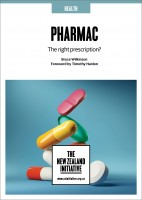
Last week, The New Zealand Initiative released a new research report: Pharmac: The Right Prescription? Pharmac’s core role is to get the best health benefits from medicines for New Zealand within a fixed budget. Read more
In George Orwell’s “1984” dystopian novel, the Ministry of Truth was the ministry for propaganda and falsifying history. He would have appreciated the Resource Management Act 1991. Read more
The Pharmaceutical Management Agency, or Pharmac, was founded in 1993 and over time has mostly achieved its goals to lower the cost of medicines for Kiwis. Dr Bryce Wilkinson’s major new report on the agency – Pharmac: the right prescription? Read more
This report examines the strengths and weaknesses of New Zealand’s arrangements for prescription medicines. Central to them is the Pharmaceutical Management Agency, Pharmac, a Crown entity. Read more
Following the release of his new report Pharmac: The right prescription?, Bryce Wilkinson talks to Mike Hosking on Newstalk ZB about the Pharmac funding model. Bryce says Pharmac deserves credits for lowering the costs of many medicines, but he raises questions about whether the government needs to pay for medicines for everyone. Read more
The Pharmaceutical Management Agency, Pharmac, attracts plenty of praise and criticism. It has achieved notably low prices for many pharmaceutical medicines but is widely criticised for not subsidising a wider range of medicines and being slow to subsidise new medicines. Read more
Use of the disembodied “we” in official policy documents usually suggests a false agreement about future resource use when, in fact, there are deeply entrenched opposing interests. To fail to acknowledge the conflict is to fail to resolve it. Read more
The concept of modern monetary theory is back. This set of economic ideas has been around for a while but has risen to prominence recently through the work of American economist and adviser to Bernie Sanders' 2016 presidential campaign, Stephanie Kelton, whose book 'The Deficit Myth' was released in June. Read more
The public health system is a political football. Every change of administration is an opportunity to boot the ball at a different set of goalposts. Read more
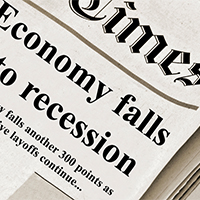
Never have governments and central banks spent other people’s money more freely to support incomes and boost banking system liquidity. Never before have the world’s major central banks’ policy interest rates been clustered so close to zero, if not already in negative territory. Read more
New Zealand is now on a dangerous path to higher public debt and unprecedented money printing with no credible plan for unwinding the situation before the next crisis, warns a new report by The New Zealand Initiative. Covid-19 and the various types of lockdown responses have caused many governments to go even more heavily into debt and print money to sustain asset prices with borrowed money. Read more
For the last couple of decades, public debt and banking system liquidity has been ratcheting up around the world after each recession or market correction. But no one appears to have any credible plan for restoring public debt, liquidity or central bank policy rates to normal levels. Read more